

AI tools are changing the way designers create architectural mood boards, making the process faster and more detailed. These AI-enhanced boards help designers present their vision clearly, saving time and improving client satisfaction. With demand on the rise, offering this service can bring in a steady income, reaching around $4.8K per month. This post will guide you through how to set up and grow your AI-powered mood board service effectively.
Understanding AI-Enhanced Architectural Mood Boards
Architectural mood boards are essential tools for designers. They help build a visual story, set the tone of a project, and communicate ideas clearly before any actual design work begins. With AI stepping in, this process is becoming faster, smarter, and more inspiring. Let’s look closely at what makes these mood boards tick, how AI changes the game, and why designers are turning to AI-powered tools.
What is an Architectural Mood Board?
An architectural mood board is a collage of images, textures, color swatches, materials, and sometimes words that capture the look and feel of a proposed design. It shapes the atmosphere and style for a space even before the technical drawings start. Think of it as a snapshot of the designer’s vision—a way to make abstract ideas concrete and shareable.
Mood boards help designers and clients get on the same page early. Gathering visual references supports decision-making and reduces misunderstandings about style or mood. Instead of just talking about “modern but warm,” you show it through carefully chosen elements. This visual groundwork saves time and inspires creativity throughout the project.
If you want to dive deeper into mood boards and how they work, check out this detailed guide on How to Make a Mood Board in Architecture.

Photo by Sami Aksu
How AI Technology Enhances Mood Board Creation
Creating mood boards used to be a manual, time-consuming task—collecting images, arranging samples, adjusting colors. AI changes all that by bringing intelligence and speed to the process. It can quickly scan vast design databases, suggest complementary palettes, or even generate entirely new visuals based on a few keywords.
AI tools analyze style preferences, architectural trends, and user inputs to deliver mood boards that align tightly with a project’s goals. Instead of hunting for hours, designers get rapid, curated options that spark fresh ideas. These systems also produce organized boards that look professional and polished right away.
What’s impressive is the way AI blends data with creativity. For example, AI can layer textures or match materials in ways humans might not immediately consider. This helps designers envision combinations that are unique and appealing.
For a real-world perspective on AI’s role in mood boards, this article on Mood-boarding and concepting in the age of AI shares fascinating insights.
Key Benefits for Designers Using AI-Powered Tools
Designers who adopt AI-powered mood board creation enjoy clear advantages that boost their workflow and client satisfaction. Here’s what stands out:
- Efficiency: AI reduces hours of manual gathering and tweaking into minutes. This means faster project starts and more time for detailed design work.
- Customization: With AI, mood boards tailor themselves to specific styles, materials, or client preferences. The result is a personalized visual story that speaks directly to the project’s needs.
- Enhanced Creativity: AI suggests novel combinations and unexplored ideas, helping designers expand their creative horizons and deliver fresh concepts.
- Improved Presentation: Professional, cohesive boards impress clients and communicate ideas clearly, helping secure approvals and avoid costly revisions.
- Consistency: AI tools help maintain visual identity across projects, making it easier to stick to brand or style guidelines seamlessly.
Incorporating these tools not only boosts quality but also opens an opportunity to offer specialized services that clients value highly. To learn how to set up and grow your own AI-powered service, explore the guides on offering AI-enhanced architectural mood board services.
The evolution of mood board creation is ripe with potential for anyone looking to help designers save time and unlock fresh inspiration. Using AI is not about replacing creativity but about enhancing it—giving you tools that work smarter, so you can focus on what matters most: great design.
Setting Up Your AI-Enhanced Mood Board Service
Starting an AI-powered mood board service is straightforward with the right tools, skills, and business setup. This section lays out what you need to launch and grow your offering so you can meet designers’ needs quickly and professionally.
Selecting the Right AI Tools and Software
The foundation of your service depends heavily on the tools you choose. A few popular AI mood board makers and AI image synthesis platforms stand out for architectural and interior design use. These tools speed up the mood board process by generating visuals or organizing materials automatically.
Some excellent options include:
- Moodboard Maker: This tool lets you prototype branding and design ideas by typing prompts, creating mood boards fast. It’s ideal for initial concept exploration.
- Canva: While not purely AI-based, Canva integrates AI-powered image suggestions and layout designs, which help arrange mood boards quickly with a polished look.
- Midjourney and DALL·E 2: These AI image synthesis tools can create custom visuals from text prompts, helping you bring fresh concepts or textures into boards where stock photos fall short.
For a fast workflow, many designers pair Pinterest for image curation with tools like Figma or Canva to assemble boards. This combo allows quick gathering and flexible design adjustments.
Choosing software depends on your preferred style and client needs, but the key is using tools that combine image generation, quick organization, and ease of export.
Acquiring Design and AI Skills to Deliver Quality Work
Having the right tools is just one part. You also need the skillset to use AI effectively while keeping design quality high. This means knowing how to:
- Select images and materials that align with architectural themes and client preferences.
- Use AI-generated images carefully, choosing those that match the project’s mood.
- Adjust layouts for clarity, balance, and visual flow.
- Understand basic design principles like color theory, texture use, and typographic hierarchy to enhance your mood boards beyond just assembling images.
On the AI side, become familiar with prompt creation for image synthesis tools. Clear and specific inputs yield better AI-generated visuals. Take time to learn each tool’s features and limitations so you can push their capabilities confidently.
Combining AI capabilities with solid design judgment lets you deliver mood boards that truly communicate a project’s tone and inspire clients.
Building a Portfolio and Demonstrating Your Value to Clients
A strong portfolio is your best marketing tool. Start by creating sample mood boards that cover various architectural styles—modern, rustic, minimalist, and more. Show diverse materials, lighting moods, and color palettes generated or enhanced by AI.
Make these samples easy to share digitally, ideally in a visually appealing format like PDF or an online slideshow. This demonstrates your ability to quickly produce professional, customized boards.
Don’t forget to:
- Include before-and-after examples showcasing how AI improved the concept.
- Highlight your workflow process briefly to show professionalism.
- Gather testimonials once you begin working with clients to build trust.
Clear presentation of your work signals that you understand both architecture and AI tools well enough to support designers effectively.
Legal and Business Setup Considerations
Before you take on clients, address the necessary business and legal matters to protect yourself and your work. This includes:
- Business registration: Choose the right structure (e.g., sole proprietorship, LLC) to fit your needs.
- Contracts and agreements: Use clear service contracts that outline scope, pricing, delivery timelines, and usage rights for mood boards.
- Copyright and image rights: Confirm AI-generated images can be legally used commercially or secure licenses for stock images. Clarify ownership of final mood board designs.
- Pricing strategy: Set rates based on time, complexity, and value delivered. Consider package deals for repeat clients.
Taking care of these details upfront helps avoid misunderstandings and builds confidence with clients, positioning you as a reliable professional.

Photo by Kevin Malik
For practical tips on how to package and price your services professionally, check out this step-by-step guide on building AI-powered voice assistant skills for brands. It offers real-world advice on launching niche AI services that can inspire your mood board business setup.
By carefully choosing tools, sharpening your skills, building a convincing portfolio, and setting up your business properly, you’ll create a strong foundation to earn steadily with AI-enhanced architectural mood boards.
Marketing and Scaling Your AI Mood Board Creation Business
Successfully growing your AI-enhanced architectural mood board service takes more than just delivering great designs—it demands strategic marketing and smart client management. In this section, we’ll cover how to reach the right audience, create an appealing online presence, price your services, and manage client feedback effectively. These steps will help you build a solid foundation to reach your monthly income goal of $4.8K.
Targeting the Right Clientele: Architects, Designers, and Agencies
The first step is identifying who will benefit most from your service. Architects, interior designers, and design agencies are your primary clients. They constantly seek fresh, professional mood boards to communicate design ideas quickly and effectively.
To connect with them:
- Research and join architecture or design forums and LinkedIn groups.
- Attend industry events or webinars to build relationships.
- Tailor your service descriptions, portfolios, and proposals to reflect the specific challenges faced by these professionals, like meeting tight deadlines or needing flexible mood boards for client presentations.
Nurturing relationships within this community not only brings clients but helps you understand their needs better, allowing you to refine your offerings continuously.
Using Social Media and Content Marketing to Showcase Your Work
Social media platforms like Instagram, Pinterest, and LinkedIn are perfect places to share your mood boards and design insights. Visual content thrives here, so post snippets of your best work, before-and-after boards showing AI enhancements, or quick tips on mood board creation.
Alongside sharing your work, create valuable content aimed at designers, such as blog posts or short videos about mood board trends, color combinations, or AI tools you use. This positions you as an expert and attracts organic interest.
To grow your digital skills and business approach, exploring detailed resources like this step-by-step guide to build AI-powered voice assistant skills can inspire new ways to market and automate aspects of your service.
Consistent, authentic posting, combined with strategic hashtags and engagement (like responding to comments), gradually builds trust and draws attention from potential clients.
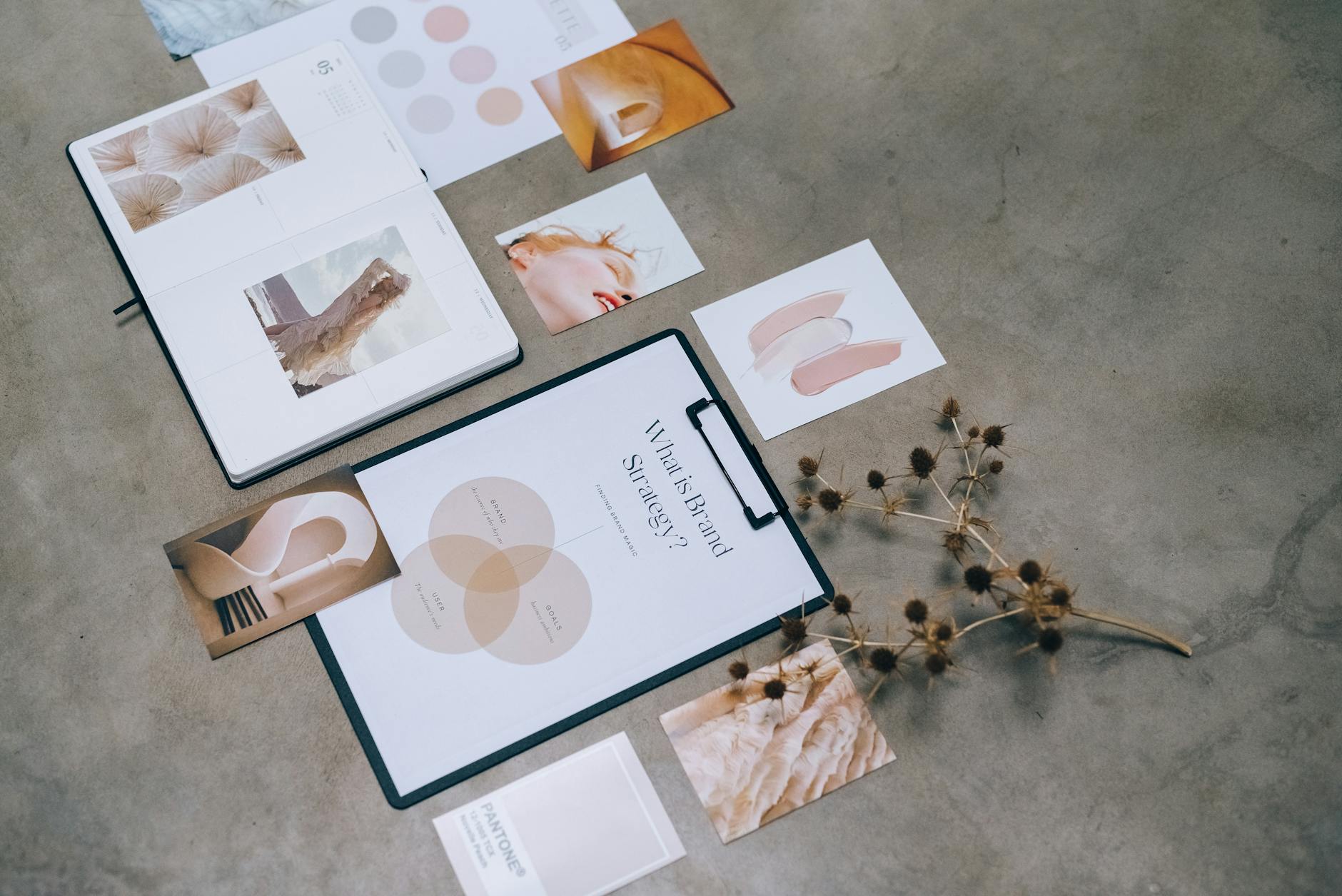
Photo by Leeloo The First
Setting Competitive Prices and Packages
Pricing your services right is crucial. You want to remain competitive but also reflect the value and time savings your AI-enhanced mood boards offer.
Consider offering:
- Basic packages for simple mood boards with limited revisions.
- Premium packages including multiple design concepts, revisions, and personalized consultations.
- Retainer offers for regular mood board deliveries to agencies or busy designers.
Research competitors’ prices and think about how much time each project takes you. Factor in AI software costs and client communication. Transparent pricing builds confidence and helps clients choose the package that fits their needs.
Offering clear, tiered packages can simplify the buying process, making it easier for clients to say yes.
Efficient Client Management and Feedback Integration
Smooth communication and feedback handling keep clients happy and returning. Use project management tools or shared cloud folders to keep files organized and accessible. Keeping clients in the loop with updates helps them feel involved and reduces last-minute changes.
When clients provide feedback, approach it as a valuable insight, not criticism. Respond promptly with clear explanations on how you will address their requests or why certain changes may or may not work. Efficient feedback integration improves your service quality and strengthens client relationships.
Turning satisfied clients into repeat customers or referrals accelerates your business growth.
For additional ideas on streamlining your AI service offerings and customer interactions, this extensive step-by-step guide to build AI-powered voice assistant skills offers practical tips that can be adapted to your mood board business model.
Marketing your AI mood board creation service with focus and organization opens a path to steady growth and reaching your $4.8K monthly goal. By targeting the right clientele, showing your value online, pricing competitively, and managing clients with care, your business sets itself up for success.
For more on shaping your marketing strategy, tools on how to apply AI in business, and scaling up, check out these insightful articles on how to design an AI marketing strategy and AI marketing tactics for startups. They bring practical approaches that can inspire your own efforts.
Maximizing Earnings and Future Opportunities with AI-Assisted Design
If you want to grow your AI-enhanced architectural mood board service beyond a one-off gig, it helps to explore ways to expand your offerings, build steady income streams, and stay ahead by keeping your skills fresh. These steps not only help you earn more but also create a business that lasts. Let’s break down some practical approaches to maximize your earnings and open doors to future opportunities.
Expanding Services into Virtual Staging and 3D Visualizations
One natural next step after mastering mood boards is offering related visual services that designers and architects need to impress clients and close deals. Virtual staging and 3D visualizations are excellent options here.
- Virtual staging uses digital furniture and decor to show how an empty or outdated space can look fully designed. This helps real estate agents and interior designers showcase properties without physical staging costs.
- 3D visualizations create photo-realistic models of architectural projects that clients can explore from different angles. Offering this service lets you add more depth and clarity than mood boards alone.
Branching into these areas allows you to package services together, upsell clients, and justify higher fees. Plus, the technology to create virtual staging and 3D images often overlaps with AI tools you already use for mood board creation, making the learning curve smoother.
These services appeal because they help clients visualize design outcomes realistically—a major factor in winning approvals. Including virtual staging or 3D renders can position your business as a one-stop creative partner for architectural visualization needs.
Creating Subscription Models or Retainer Agreements for Steady Income
Instead of relying only on project-based payments, try setting up ongoing subscription or retainer deals. These models create predictable cash flow and build long-term client relationships.
- Subscription models might involve delivering a set number of AI-enhanced mood boards or design updates per month for a fixed fee.
- Retainer agreements provide clients with priority service, monthly hours, or bundled offerings at discounted rates.
These options attract busy agencies or designers who want continuous visual content support without repeatedly negotiating contracts. For you, they reduce the pressure of constantly finding new clients and allow you to plan your schedule and income better.
To implement this smoothly, clearly define what services are included, turnaround time, revision policies, and payment terms. Over time, you can tweak packages based on client needs and your capacity, adapting your offerings as your expertise deepens.
Staying Updated with AI Innovations to Maintain Competitive Edge
AI tools and features evolve fast. Staying current keeps your service relevant and valuable while helping you offer better results than competitors.
- Regularly try new AI platforms or software updates that boost image quality, speed, or customization.
- Follow industry news, blogs, and tutorials focused on AI in design and architecture.
- Join design and AI communities online where you can learn tips and share experiences with peers.
- Experiment with AI-powered tools that automate parts of your workflow, freeing time for creative tasks or client care.
Keeping pace with AI advancements positions you as a forward-thinking professional. You can anticipate client needs, incorporate new trends, and safeguard your business from becoming outdated.
Combining consistent learning with expanding your service range and stable income models sets you up well to build an AI-assisted design business that grows steadily and adapts to future demands.

Photo by Tima Miroshnichenko
For tips on building subscription models or exploring reliable service packages, you might find practical ideas in guides about successful AI-driven businesses like this step-by-step guide to building AI-powered voice assistant skills for brands. These kinds of resources provide proven strategies you can adapt to your mood board and architectural visualization offerings.
Common Challenges and Solutions in Offering AI Mood Board Services
Launching and running an AI-powered architectural mood board service offers clear opportunities, but it comes with its share of challenges. Handling technical issues, maintaining the balance between automation and creativity, and managing client expectations are common hurdles you’ll face. Addressing these effectively can keep your service professional and your clients happy, paving the way for consistent growth and income.
Technical Difficulties and Learning Curve with AI Tools
Getting comfortable with AI tools can feel overwhelming at first. These platforms often come with complex settings, frequent updates, and a need for precise inputs to generate the right visuals. It’s normal to experience frustration when AI outputs don’t match your vision or require multiple adjustments.
To ease the learning curve:
- Start simple: Master basic features before exploring advanced options.
- Practice prompt writing: How you phrase requests to AI can make a huge difference. Experimenting improves your control over image generation.
- Use tutorials and communities: Platforms like Midjourney or DALL·E have active user forums where you can learn tips and troubleshoot.
- Combine tools intelligently: Sometimes AI alone won’t do everything. Pair it with manual editing in tools like Canva or Figma to polish your boards.
By investing time upfront to understand your tools, you’ll reduce errors and speed up your workflow, turning tech challenges into strengths.
Balancing AI Automation with Creative Human Input
AI can accelerate mood board creation but it isn’t a magic wand that replaces human insight. Purely relying on AI risks producing generic or disconnected boards that miss a client’s unique style or project goals. The key is to use AI as a helper, not a full creator.
Here’s how to balance the two:
- Use AI for quick image sourcing, palette suggestions, and initial layouts.
- Bring in your personal touch by curating images, adjusting compositions, and refining color schemes.
- Keep design principles front and center: balance, contrast, and hierarchy will always matter.
- Stay mindful of the client’s brand or architectural style to keep boards consistent and relevant.
This blend ensures your mood boards stand out while still benefiting from AI efficiency.
Managing Client Expectations Effectively
Clients may not fully grasp what AI-enhanced mood boards can do or might expect instant perfection. Managing these expectations upfront saves confusion and frustration later.
Communicate clearly about:
- How AI speeds up creation but might need your expertise for final polish.
- The number of revisions included and typical timelines.
- What AI can and cannot generate (for example, unique custom renderings versus stock-like images).
- The collaborative nature of the process where client feedback shapes the final product.
Setting these boundaries builds trust and positions you as a knowledgeable partner, not just a tool operator.
This approach also encourages clients to see the value in your service beyond just the AI-generated images.

Photo by Mikhail Nilov
Investing effort into these areas helps you build a smoother workflow and happier clients, which are essential for growing a reliable income from your AI mood board service.
For more insights on offering AI-enhanced services and managing client relations, explore this practical step-by-step guide on launching AI-powered solutions.
Also, challenges in AI graphic design and tips to overcome them are well covered in this insightful article on AI challenges in graphic design, which can provide additional context to your AI mood board journey.
Conclusion
Offering AI-enhanced architectural mood board creation is a smart way to tap into a growing market while boosting efficiency and creativity. With the right tools, skills, and a clear business approach, earning around $4.8K per month is within reach. This service fits naturally into design workflows, helping designers communicate their vision faster and with greater impact. By expanding your offerings and staying updated on AI developments, you can build a steady income and stay competitive. Your focus on quality, clear communication, and client needs will set your service apart and open doors to future opportunities in design and visualization.